Clinical Kinesio Taping at Spine Spot Chiropractic: Functional Support Without Restriction
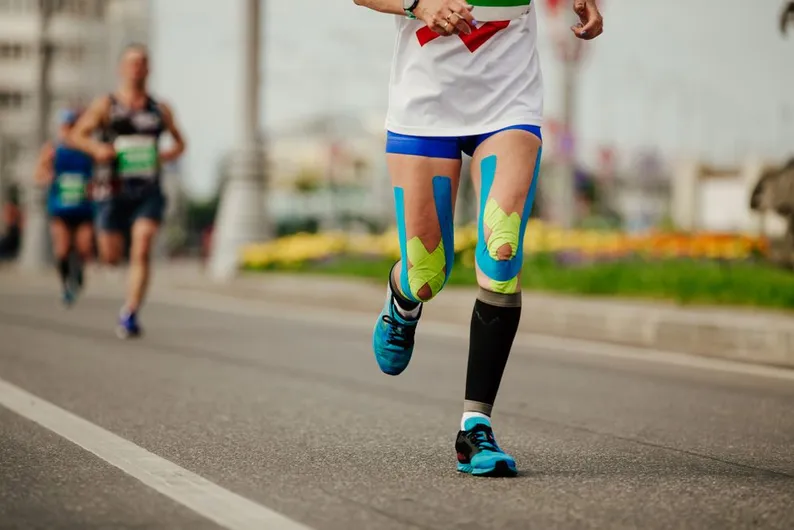
Kinesio Taping is a specialized, dynamic soft tissue intervention designed to stabilize joints, promote lymphatic drainage, and alter nociceptive pain signals without restricting biomechanical range of motion. At our Basalt clinic, we utilize precise fascial tension protocols to support the active recovery of Roaring Fork Valley residents, providing targeted mechanical support for everything from acute sports sprains to complex overuse syndromes.
Watch Dr. Fraser demonstrate a taping application
Why Does the Active Roaring Fork Valley Lifestyle Demand Advanced Taping?
Our region is defined by extreme physical output. We do not see typical, sedentary injuries here; we see complex kinetic chain failures caused by repetitive structural overload. Whether you are navigating the steep descents on Crown Mountain or managing heavy loads on local job sites, your fascial system is under constant mechanical stress.
A common presentation in our clinic is the collision of a sedentary workweek with a highly active weekend. This frequently manifests as Upper Cross Syndrome—specifically, the hypertonicity of the pectoralis major and upper trapezius with reciprocal inhibition of the deep cervical flexors—often colloquially known as "desk neck" or "slouching." When these postural faults are taken onto the slopes or the trails, joint injury is almost inevitable.
When I treat the local demographic, I frequently see two distinct clinical scenarios where standard athletic tape fails, but Kinesio tape excels:
- The Hunter Creek Trail: Riders constantly absorb high-frequency vibration through the handlebars, leading to lateral epicondylitis and forearm flexor tendinosis. We apply Kinesio tape to inhibit the overactive extensor carpi radialis brevis, reducing the mechanical load on the tendon origin.
- The Aspen/Snowmass Skier: Heavy mogul runs often lead to patellar tracking dysfunction. Instead of locking the knee in a rigid brace that degrades muscle activation, I utilize a facilitation taping protocol to guide the patella medially, re-educating the vastus medialis obliquus (VMO) while the patient continues to ski.
How Do We Apply Kinesio Tape at Spine Spot?
You cannot simply "stick tape" on acute soft tissue trauma and expect a clinical outcome. The efficacy of K-tape hinges entirely on anatomical precision, vector direction, and applied stretch percentage. We integrate Kinesio taping seamlessly with our broader clinical arsenal—including Gonstead, Thompson, Diversified, and Activator techniques—to ensure the underlying joint mechanics are corrected before we tape the surrounding soft tissue.
We leverage three primary physiological mechanisms when applying Kinesio Tape:
- Micro-Fascial Decompression & Lymphatic Drainage: By applying the tape with specific tensioning (often a "fan" cut), the tape creates a microscopic lifting effect on the epidermis. This increases the interstitial space between the skin and the underlying fascia, accelerating the evacuation of edema and localized hemorrhage. Clinical research demonstrates that this mechanism is highly effective in reducing recovery time for acute musculoskeletal injuries.
- Neurological Pain Gating: The elastic texture of the tape provides constant, low-level tactile stimulation to mechanoreceptors in the skin. This sensory input races along large-diameter nerve fibers, effectively closing the "gate" on slower-moving radicular pain signals traveling to the brain.
- Proprioceptive Re-education: When paired with extremity manipulation, K-tape provides a constant neurosensory feedback loop. Peer-reviewed literature confirms that this tactile feedback enhances joint position sense, effectively retraining your central nervous system to avoid destructive movement patterns.
To maximize tissue healing, we frequently pair taping protocols with targeted soft tissue modalities, Trigger Point Ultrasound, and Laser Therapy to drive cellular ATP production and accelerate collagen repair. We do not force the patient to fit the technique; we build a custom protocol to resolve your specific biomechanical failure.
Why Travel to Willits Town Center in Basalt for Kinesio Taping?
There is a profound difference between a pre-cut tape job at a pharmacy and a clinical application rooted in neuro-biomechanics. When we recommend Kinesio taping to a patient at our Willits Town Center clinic, it is because we need a "take-home" therapy that holds the structural corrections we made in the office.
If you are dealing with chronic postural syndromes or are rehabbing a torn rotator cuff, we apply the tape to actively inhibit compensatory muscular fatigue between visits. You make the drive to Basalt because you need a doctor who understands exactly why your shoulder is failing on the river, and how to structurally reinforce it so you don't lose your season.
We take the time during our comprehensive diagnostic triage to evaluate your kinetic chain from the ground up, ensuring that every piece of tape applied serves a distinct, measurable clinical purpose.
Frequently Asked Questions
How long does a clinical application of Kinesio Tape last? When applied correctly to clean, dry skin using our medical-grade adhesive, a single application typically lasts 3 to 5 days. It is designed to withstand the active Colorado lifestyle, including sweating, swimming, and daily showering.
Can Kinesio Tape replace a structural chiropractic adjustment? No. Kinesio tape is a soft-tissue adjunct. It stabilizes the muscular and fascial systems, but it cannot correct a joint subluxation or mechanical fixation. We utilize tape to support the joint after normal biomechanics have been restored through a specific adjustment.
Does the color of the therapeutic tape matter? No. While tape comes in various colors and patterns for aesthetic preference, the elasticity, adhesive strength, and clinical efficacy remain identical across all colors.
Ready to stop compensating and start recovering? Schedule your advanced biomechanical evaluation to see if clinical taping is the right intervention for your injury.
✉️ Request Appointment | 📅 Book Online| 📞 Call (970) 924-1015 | 💬 Text (970) 924-1015