Stop the Clicking: Non-Surgical TMJ Restoration & Neuromuscular Jaw Relief
Medically reviewed by: James R. Fraser III, D.C. | Doctor of Chiropractic

What is the Temporomandibular Joint (TMJ)?
The temporomandibular joint (TMJ) is a remarkable and complex system that connects your lower jaw to the base of your skull. Located in front of each ear, this "hinge and sliding" mechanism acts as the engine for essential daily activities such as eating, speaking, laughing, and yawning.
Understanding TMJD (Temporomandibular Joint Dysfunction)
When the balance of the jaw muscles, joints, and soft tissues is disrupted, it leads to Temporomandibular Joint Dysfunction (TMJD).
Studies suggest that TMJ disorders affect approximately 5-12% of the general adult population, with a higher prevalence among women. While pinpointing the exact cause can be challenging, the result is often significant pain, reduced functionality, and discomfort during movement. Fortunately, many individuals find relief through conservative chiropractic care.
Symptoms and Risk Factors
Common Symptoms of TMJD If you are experiencing the following, you may be suffering from a TMJ disorder:
- Pain or Tenderness: Discomfort in the jaw joint area, neck, and shoulders.
- Aching Around the Ear: Pain that radiates from the jaw into the ear.
- Chewing Difficulties: Trouble chewing or general discomfort while eating.
- Jaw Locking: Occasional locking of the jaw, making it difficult to open or close the mouth.
- Clicking or Grating Sounds: Audible noises when opening the mouth or chewing.
Identifying Risk Factors Several factors may increase the likelihood of developing TMJD, including:
- Stress & Tension: Prolonged teeth grinding or clenching (bruxism) strains jaw muscles.
- Jaw Injuries: Past trauma or impact to the jaw.
- Arthritis: Conditions like rheumatoid arthritis or osteoarthritis affecting the joint.
- Connective Tissue Diseases: Issues affecting the tissues surrounding the jaw.
- Misaligned Teeth: Malocclusion (bad bite) contributing to dysfunction.
- Genetics: Family history can play a role in susceptibility.
(Note: Conditions like irritable bowel syndrome may coexist with TMJD and are considered during diagnosis.)
Diagnosis and Treatment at Spine Spot Chiropractic
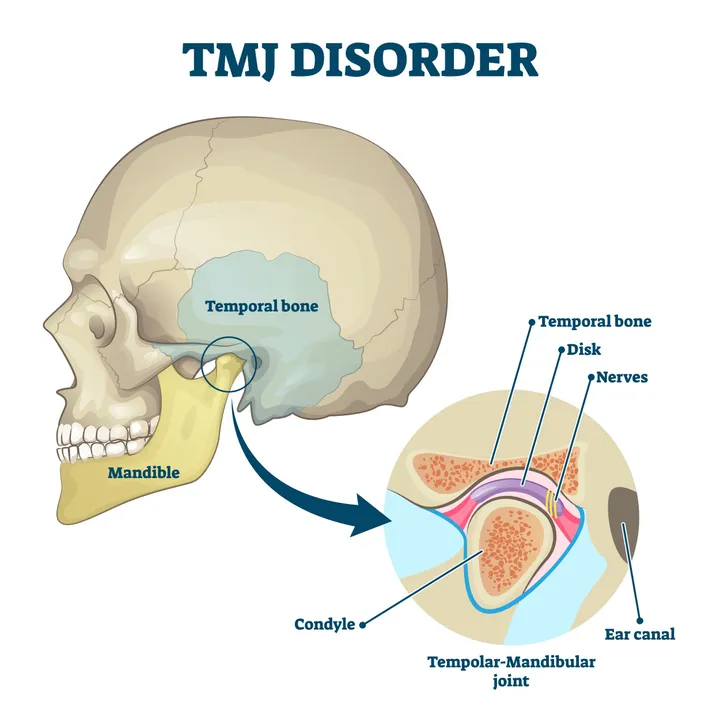
How We Diagnose TMJD Diagnosing TMJD requires a thorough, individualized approach. Dr. James Fraser begins by gathering a detailed medical history and discussing your specific symptoms—whether it is facial pain, clicking, or limited movement.
- Physical Exam: We assess the jaw’s range of motion, listen for unusual sounds, and check for locking.
- Imaging: In certain cases, X-rays or advanced imaging may be recommended to identify contributing factors like scar tissue or arthritis.
- Cervical Evaluation: Dr. Fraser focuses on the role of the cervical spine (neck) and how dysfunction there may be the root cause of your jaw pain.
Effective Chiropractic Care in Basalt, CO
Chiropractic care offers a holistic, non-invasive approach to recovery. Dr. Fraser uses specific techniques to reduce tension and restore proper function:
- Spinal Adjustments: Realigning the upper cervical spine to reduce nerve interference and tension affecting the jaw.
- Targeted Muscle Work: Focused treatment on the pterygoid muscles (the primary muscles used in chewing).
- Intraoral Myofascial Release: Specialized techniques to relax tight tissues inside the mouth.
- Soft Tissue Massage: Relieving external muscle tension around the jaw and neck.
Watch Dr. Fraser explain how we adjust the jaw for TMJ relief
Patient Empowerment: Lifestyle Changes & Exercises
Managing TMJD is a collaborative effort. Alongside chiropractic treatment, simple lifestyle changes can make a significant difference.
Lifestyle Modifications
- Dietary Choices: Stick to soft foods and avoid hard or crunchy items to allow the jaw to rest.
- Habit Correction: Avoid nail-biting, chewing gum, or clenching your teeth.
- Stress Reduction: Incorporate deep breathing or meditation to lower overall muscle tension.
Gentle Jaw Exercises Dr. Fraser may prescribe specific exercises to restore normal movement. These often include:
- Slow opening and closing of the mouth.
- Controlled side-to-side movements.
- Strengthening exercises to stabilize the jaw without causing pain.
Regular practice of these exercises can help alleviate pain, improve flexibility, and support the overall function of the joint.
Why Choose Spine Spot Chiropractic?
A Collaborative Approach to Healthcare Managing TMJD is most effective when patients and providers work as a team. Dr. Fraser takes the time to understand your unique situation and employs a "shared decision-making" model.
If your case is complex (such as a dislocated jaw or severe structural damage), we prioritize your health by referring you to trusted specialists for advanced care. However, for the majority of TMJ sufferers, our conservative care addresses the symptoms effectively without the need for surgery.
Contact Dr. James Fraser Today
Don't let jaw pain dictate your life. For comprehensive care in managing TMJ dysfunction in the Roaring Fork Valley, reach out to Spine Spot Chiropractic.
Request an Appointment | Call/Text: (970) 924-1015 | Schedule Online
Additional Conditions Treated
Explore our resources to learn more about other common chiropractic conditions treated at our clinic.