How to Choose a Chiropractor in the Roaring Fork Valley
Precision Medicine for the High-Performance Life
Living in the Roaring Fork Valley places a unique allostatic load (cumulative physiological stress) on your body. Whether you are managing a portfolio from a desk in Aspen, traversing the valley for the trades, or skinning up Highland Bowl, your body is your most valuable asset.
But when dysfunction arises—manifesting as acute pain, radiculopathy (nerve pain), or limited range of motion—selecting a provider is a critical decision. You are right to be discerning. You are right to research. We need to diagnose and treat the cause, not just manage the symptoms.
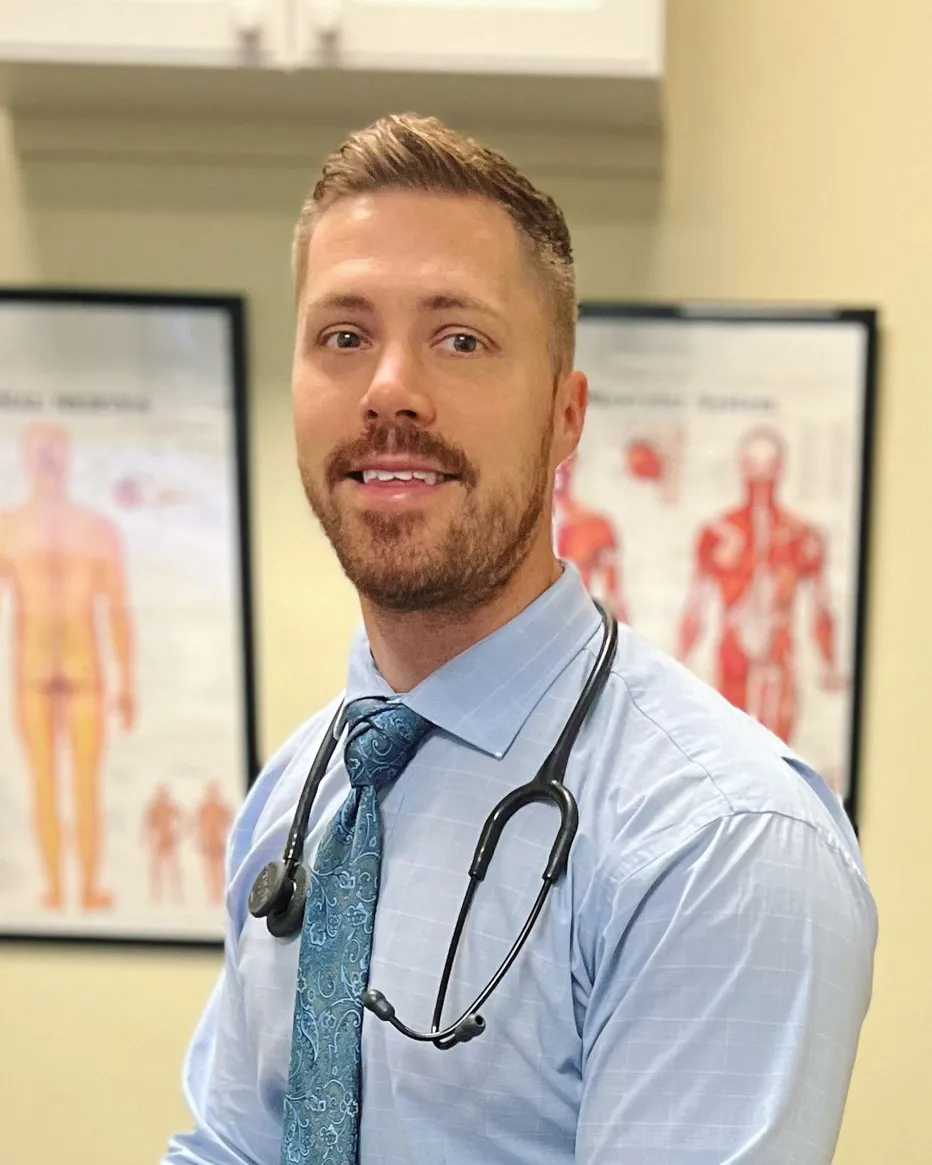
In a marketplace saturated with generalized care, Dr. James Fraser offers a distinction: Clinical Specificity. Here is the 4-point neuromusculoskeletal standard you should require for your health management.
1. Demand a Diagnosis Based on Pathomechanics
(Understanding the "Why" Before the "How")
You would never authorize a significant investment without due diligence. Your physiology requires that same level of scrutiny. A generalized chiropractor may rely on palpation (touch) alone, but a clinical expert audits the intersegmental dysfunction—the specific breakdown in how one vertebra moves in relation to another.
The Spine Spot Clinical Standard: We do not guess; we audit the system. We perform a comprehensive Neuromusculoskeletal Examination to differentiate between a structural pathology (bone/disc issue) and a functional deficit (muscle/nerve issue).
Dr. Fraser’s clinical philosophy is precise:
"I like to know what joint I am moving, why I am moving that specific joint, and what is the expected outcome."
If a provider cannot articulate the biomechanical rationale behind their treatment, they are not practicing precision medicine; they are practicing habit. You deserve a targeted intervention.
2. The "Palmer" Distinction & Evidence-Based Protocols
In the field of spinal care, pedigree matters. Dr. James Fraser is a graduate of Palmer College of Chiropractic, the institution that established the epistemology of the profession.
We utilize the Gonstead System, a method renowned for its biomechanical analysis. Unlike general manipulation, which often uses rotational torque (twisting), Gonstead focuses on the P-A (Posterior-to-Anterior) vector. This allows us to address discogenic issues without creating unnecessary shear forces on the spine.
The "Checks and Balances" Logic: We operate on a binary of expected outcomes. Dr. Fraser views your response to care as data:
"If your diagnosis and treatment are correct, you should respond as expected. If one of those is missing, we need to re-evaluate."
This is the safety protocol that separates "trying something out" from Evidence-Based Practice.
3. "Valley Tested" Kinetics: Addressing the Kinetic Chain
The Roaring Fork Valley lifestyle creates unique Kinetic Chain dysfunctions—where a problem in one area causes failure in another.
- The Skier (Closed-Chain Trauma): The rigid ski boot locks the subtalar joint in the ankle, forcing the knee and hip to absorb excessive torque. We treat the resulting proprioceptive deficits that lead to ACL vulnerability.
- The Cyclist (Flexion Intolerance): Sustained lumbar flexion on the bike creates posterior disc pressure. We restore extension to prevent the cumulative trauma disorder often labeled as "chronic back pain."
- The Executive (Anterior Head Carriage): Hours at a workstation lead to "Tech Neck," or Upper Crossed Syndrome, where tight pectorals and weak deep neck flexors compress the cervical spine.
Whether you are an elite athlete or a philanthropist active in the community, Dr. Fraser understands the physics of your lifestyle.
4. Addressing Compensation: The "Rescue & Release" Model
Pain is rarely the problem; pain is the signal. Often, the site of pain is merely the area compensating for a silent dysfunction elsewhere in the chain.
A superior clinician does not just suppress the symptom; they resolve the pathophysiology (the root cause).
Dr. Fraser’s approach is holistic and redundant:
"I use checks and double checks. I want to make sure you are all the way adjusted, not halfway. We treat what is causing the issue, but also what is compensating. If we need to incorporate soft tissue modalities to reduce symptoms, we do it."
Our goal is Homeostasis—returning your body to a stable state of self-regulation. We aim to restore your structural integrity so you require less intervention over time, not more.
The Verdict: The Neural Reset
When a specific, high-velocity, low-amplitude adjustment corrects a vertebral subluxation, the result is an immediate reset of the nervous system’s mechanoreceptors.
Patients often describe this as a sudden feeling of "lightness" or "unfamiliar ease." It can be disorienting because you have become habituated to dysfunction. Dr. Fraser’s insight in this moment is crucial:
"That is what normal is supposed to feel like. Right now, it feels different because 'normal' doesn't feel normal to you yet... but it will."
Do Not Defer Your Maintenance
Every day your spine operates in a state of misalignment, your body is building degenerative patterns to compensate. The cost of correction is lower the sooner we intervene.
Do not normalize pathology. Secure the clinical excellence, safety, and evidence-based care that the valley’s most discerning patients trust.
Your appointment is a reservation for a Clinical Examination, not a sales pitch.
- Schedule Your Initial Examination Online (Secure your time slot immediately via our portal)
- Call or Text (970) 924-1015 (Speak directly with Dr. Fraser regarding your case)