Protect Your Season: Biomechanical Lumbar Restoration & Performance Recovery for Skiers
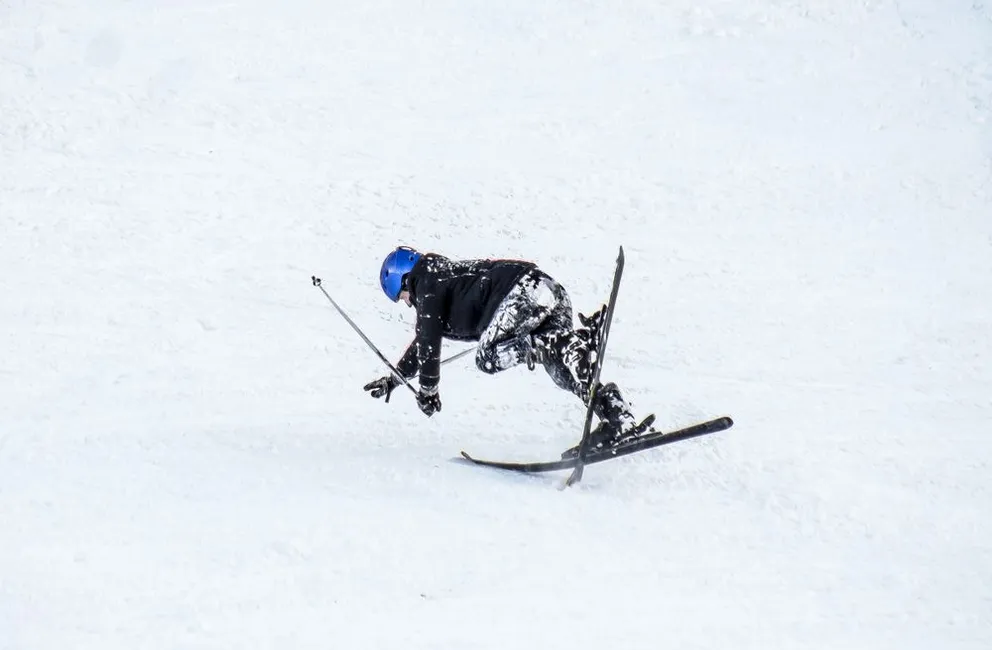
Aspen Skier's Guide to Lower Back Pain: Mechanics, Prevention, and Recovery
If you live or visit the Roaring Fork Valley, you know the feeling. It’s 3:00 PM on a Tuesday. You’ve just finished a double-black lap on Ajax, or
maybe you’ve spent the morning fighting the deep powder in Highland Bowl. Your quads are burning—that’s normal. But then, as you unbuckle your boots in the parking lot, you feel it: that sharp, electric zing shooting down your glute, or the dull, locked-up ache across your lower back.
Skiing is more than just a sport here; it’s a way of life. But biologically speaking, alpine skiing is a traumatic event for the lumbar spine.
As a Gonstead specialist located just down the road in Willits Town Center, I treat skiers from Aspen, Snowmass, Basalt, Carbondale, and Glenwood Springs every single week. The story is often the same: "I thought it was just sore muscles." But often, it is a mechanical failure of the spinal discs caused by specific G-force loads.
This guide goes beyond generic "ice and rest" advice. We are going to look at the physics of skiing, why your back hurts, and how to stay on the mountain all season long.
The Physics of "Skier’s Spine": Why the Mountain Hurts
Skiing puts the human body in a position it was never evolutionarily designed to hold for six hours straight. To understand your pain, you have to understand the forces at play.
1. The Mogul Effect: Vertical Compression & Flexion
When you are navigating the moguls on Face of Bell, your knees act as shock absorbers. But once your knees hit full flexion, the remaining force has to go somewhere. It travels directly up the kinetic chain into your pelvis and lumbar spine (lower back).
Unlike walking, where force is distributed evenly, skiing moguls forces the spine into flexion (bending forward) while simultaneously adding vertical compression.
The Clinical Reality: This combination pushes the nucleus of your spinal discs backward—directly toward the sensitive nerve roots that control your legs. This is a common mechanism for a herniated or bulging disc from skiing.
2. The Carving Effect: G-Force & Torsion
High-speed carving on groomers (like the cruisers at Snowmass) generates significant G-forces. When you initiate a hard turn, you aren't just leaning; you are resisting centrifugal force. This requires massive isometric contraction of the Quadratus Lumborum (QL) muscles and the spinal erectors.
If your pelvis is even slightly misaligned (rotated) before you start that turn, you are loading thousands of pounds of pressure onto a joint that is effectively "jammed." This torque is the primary cause of acute facet joint locking—that feeling where you suddenly "can’t straighten up."
3. "Powder Spine": The Extension Trap
We all live for powder days. But deep powder requires a different stance—often leaning back ("backseat") to keep tips up. This forces the lumbar spine into hyperextension for extended periods. This jams the facet joints together at the back of the spine, leading to a distinct, sharp pinching pain that feels different from the dull ache of a disc issue.
Why "General" Chiropractic Often Fails Skiers
Many patients drive to my office in Willits Town Center from Aspen because they’ve tried generic manipulation and it didn't hold.
If you have a herniated disc from skiing, indiscriminate "cracking" or "twisting" of the spine is the last thing you need. That is the "spray and pray" approach.
The Gonstead Difference at Spine Spot
I utilize the Gonstead System, widely considered the "gold standard" for mechanical spinal engineering.
- Precision vs. Generalization: We don't just manipulate the whole area. We find the exact vertebrae that has shifted.
- The Disc Factor: Gonstead is specifically designed to manage disc integrity. By analyzing the level of the disc wedge, we can adjust the spine without adding rotation that could worsen a tear.
Prevention: Bulletproofing Your Back for the Season
You don’t need to do 100 sit-ups. You need mobility where it matters (hips) and stability where it counts (lumbar spine).
1. The "Hip Hinge" is Non-Negotiable
If your hips are tight, your lower back has to do the bending. This is catastrophic for skiers. You must be able to disassociate your hip movement from your spine movement.
The Test: Can you squat without your lower back rounding? If not, you are at high risk for injury.
2. The Pre-Ski "Opener" (Do This in the Parking Lot)
Most skiers stretch their hamstrings. That’s fine, but your Hip Flexors (Psoas) are the real enemy. Skiing is a flexed-hip sport. This shortens the Psoas, which then pulls on your lumbar spine, creating massive compression.
The Fix: The Lunge-with-Reach.
- Step into a deep lunge.
- Reach the arm on the same side as the back leg straight up to the sky.
- Lean slightly away from the back leg.
- Hold for 30 seconds.
3. Gear Matters: It Starts at the Feet
Your boots are the foundation of your spine. If your boots are too packed out, or if you lack proper footbed support, your ankles collapse inward (pronation). This internally rotates the tibia, the femur, and eventually torques the pelvis.
Local Tip: Don't guess on boots. Go see the pros in Aspen. Ask them to check your alignment. A custom footbed can sometimes do more for back pain prevention than stretching can.
Acute Recovery: "I Tweaked My Back on the Mountain. Now What?"
You’re in pain. You’re wondering if you should ski tomorrow. (The answer is usually no).
- Stop the Heat: In the first 48 hours of an acute ski injury, inflammation is high. Hot tubs feel good, but they increase inflammation. Use Ice.
- Decompress: Lie on your back on the floor with your legs up on a chair (90/90 position). This passively opens the lumbar disc spaces.
- Get Assessed Immediately: Waiting "to see if it goes away" allows the muscles to build up a protective spasm (splinting), which makes the correction harder later.
The Willits Advantage: Worth the Short Drive
I know the mindset. When you live in Aspen or Snowmass, driving "down valley" feels like a road trip.
But when it comes to your spine—the literal structure that allows you to ski—proximity shouldn't be your primary filter. You need the right mechanic.
Spine Spot Chiropractic is located in Willits Town Center (Basalt), roughly a 20-minute drive from Aspen.
- Easy Parking: No hunting for spots or paying exorbitant fees.
- Advanced Diagnostics: We utilize on-site digital imaging to see exactly what happened during that crash.
- Specific Care: We don't do "cookie-cutter." We treat the specific biomechanical demands of the Aspen athlete.
Whether you are battling chronic sciatica from skiing or just want to ensure your alignment is optimized for a trip to the Highlands Bowl, we are here to help you perform at your peak.
Ready to get back on the slopes pain-free?
Request an Appointment | Call/Text: (970) 924-1015 | Schedule Online