Reclaim Your Mobility: Non-Surgical Sciatic Nerve Decompression & Radiculopathy Relief
Dr. James Fraser, D.C. — Focused on Pinpointing and Decompressing the Sciatic Nerve Root
If you feel a searing, sharp pain radiating from your lower back, through your buttocks, and down one leg, you are likely suffering from sciatica. This is not a diagnosis, but a symptom—the result of the sciatic nerve being compressed or irritated at its root in the lower spine (lumbar area).
At Spine Spot Chiropractic in Basalt, CO, Dr. James Fraser’s approach is not to mask the pain, but to perform a precise, structural correction to remove the pressure from the nerve. We focus on finding the exact cause of compression so you can return to pain-free hiking, skiing, and daily life in the Roaring Fork Valley.
What Causes Your Sciatica?
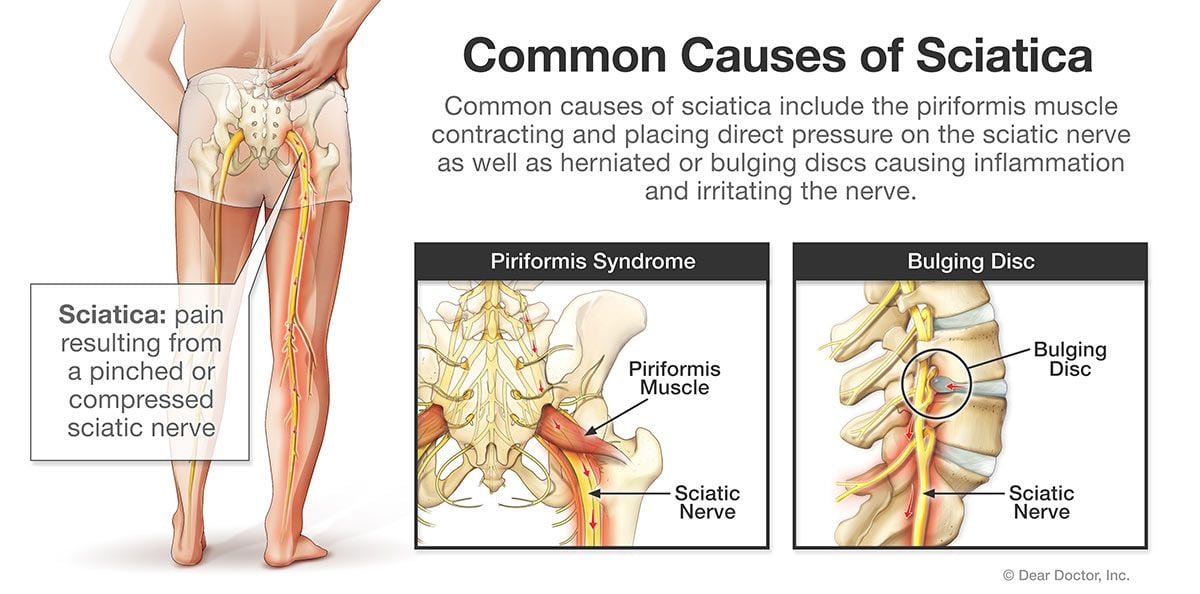
Sciatica can be debilitating, but in the vast majority of cases, it is caused by a mechanical issue in the spine. Dr. Fraser's comprehensive examination determines which of the following common causes is irritating your sciatic nerve:
| Cause of Compression | Description | Dr. Fraser's Focus |
| Herniated or Bulging Disc | The soft inner material of a disc pushes out and directly pressures the nerve root. | Decompressing the spine to create space for the disc to retract. |
| Lumbar Subluxation | A misalignment (or "fixation") of a lower back vertebra (L4, L5) that pinches the nerve as it exits the spine. | Gonstead System analysis to identify and adjust the specific misaligned joint. |
| Piriformis Syndrome | The piriformis muscle, which sits deep in the buttocks, tightens or spasms and compresses the sciatic nerve running beneath it. | Soft tissue work and joint mobilization to release muscle tension and hip immobility. |
| Spinal Stenosis | The spinal canal narrows, putting pressure on the spinal cord and nerve roots (more common in older adults). | Improving joint mobility and posture to maximize the available space in the spinal canal. |
Dr. Fraser’s Sciatica Treatment Strategy
Dr. James Fraser, a Palmer College graduate with over 140,000 spinal adjustments, employs a specific, multi-phase strategy to treat sciatica that prioritizes precision and long-term stability.
STEP 1: Precision Diagnosis
Before any treatment, Dr. Fraser uses specialized diagnostic methods to distinguish sciatica from other conditions like Sacroiliac (SI) joint pain or hamstring strains.
- Gonstead Analysis: Utilizing this biomechanical "gold standard," Dr. Fraser identifies the specific vertebra that is misaligned and causing nerve compression.
- Orthopedic Testing: Specific movements and muscle strength tests are performed to grade the severity and location of nerve involvement.
- Digital Imaging Review: X-rays are used to visualize disc space and structural integrity, confirming the mechanical diagnosis.
STEP 2: Decompression and Nerve Release
Treatment is always customized but typically involves a combination of two primary techniques focused on taking pressure off the nerve:
- Spinal Decompression Therapy: This non-surgical, traction-based treatment gently stretches the spine. It creates negative pressure within the discs, which helps pull bulging or herniated disc material away from the nerve root. This is critical for alleviating the most common cause of severe sciatica.
- Specific Chiropractic Adjustment (Gonstead/Diversified): Dr. Fraser delivers a precise, low-force adjustment to the exact misaligned joint (subluxation). By correcting the vertebral position, nerve irritation is immediately reduced, restoring function and mobility.
STEP 3: Inflammation Reduction & Soft Tissue Healing
To ensure the correction holds and to accelerate healing, we combine targeted physiotherapy:
- Cold Laser Therapy: A painless, non-invasive treatment that uses specific wavelengths of light to reduce inflammation around the nerve root and accelerate tissue repair. This is highly effective for calming an acutely irritated sciatic nerve.
- Soft Tissue Release: Techniques like Trigger Point Therapy are applied to tight muscles (especially the Piriformis) that may be mimicking or exacerbating sciatic pain.
- Rehabilitation Exercises: You will receive a personalized set of stretches and strengthening exercises for the core and glutes to stabilize the lower spine and prevent future episodes.
Frequently Asked Questions About Sciatica
Can a chiropractor fix sciatica? Yes. Chiropractic care is highly effective for sciatica because it addresses the root cause—usually a misalignment or disc issue compressing the nerve—rather than just masking the pain with medication.
How do you treat sciatica without surgery? At Spine Spot Chiropractic in Basalt, we use a combination of Spinal Decompression to relieve disc pressure, precise chiropractic adjustments to realign the spine, and Cold Laser Therapy to reduce inflammation.
How long does sciatica last? Acute sciatica may resolve in a few weeks with proper care, while chronic cases can persist for months if untreated. Early chiropractic intervention typically speeds up recovery time significantly.
Ready to Ditch the Pain?
Sciatica responds remarkably well to specific, non-invasive chiropractic care. Stop relying on pain medications and start addressing the structural cause of your pain.
Book your comprehensive sciatica evaluation with Dr. James Fraser today.