Top Methods on How to Improve Balance: Expert Tips and Exercises

- posted: Aug. 04, 2025
Want to know how to improve balance? Whether you want to prevent falls or boost athletic performance, this guide provides expert tips and exercises to help you enhance stability in your daily life.
Key Takeaways
Incorporating simple balance exercises like weight shifts and single-leg stands into daily routines can significantly improve stability over time.
Strengthening core muscles through exercises such as knee curls and back-leg raises enhances overall balance and reduces the risk of falls.
Practices like Tai Chi and yoga, along with proprioceptive training and visual feedback, are effective methods to boost balance, especially for older adults.
Starting with Balance Exercises

Balance exercises are a cornerstone of physical health, offering numerous benefits that extend beyond just stability. They enhance your overall sense of security and independence by preventing falls and promoting a stable lifestyle. Everyone, from athletes to older adults, can benefit from balance training to maintain and improve stability.
Incorporating balance exercises into daily routines can be simpler than you think. You can add balance training alongside your regular physical exercises. Try standing on one leg while brushing your teeth or waiting for your coffee to brew. These small, daily practices can make a significant difference in your balance over time.
Core exercises are particularly effective in enhancing balance. Strengthening your core muscles improves overall stability by allowing better coordination among the muscles surrounding your trunk. Exercises such as planks and bridges not only fortify your core but also reduce the likelihood of falls by stabilizing your body during movement.
Starting with simple balance exercises such as weight shifts or single-leg stands can set a strong foundation. These exercises engage stabilizing muscles and improve coordination, making daily tasks easier and safer. As you progress, you can incorporate more challenging exercises to continue improving your balance and stability.
Weight Shifts for Beginners
Weight shifts are a fantastic starting point for anyone new to balance exercises. This introductory exercise helps enhance stability and coordination by teaching your body to distribute weight evenly from one leg to the other. Practicing weight shifts significantly improves balance and reduces the risk of falls.
To perform a weight shift, follow these steps:
Stand with your feet hip-width apart to ensure your body is well-aligned and ready for the exercise.
Distribute your weight evenly across both feet.
Gradually shift your weight to one side, lifting the opposite foot slightly off the ground.
Hold this position for up to 30 seconds.
Return to the starting position.
Repeat the process on the other side.
You can easily incorporate weight shifts into your routine by practicing while brushing your teeth or waiting in line. These small efforts lead to significant balance improvements over time. As your balance improves, you can increase the duration and number of repetitions to further challenge your stability and coordination.
Single-Leg Stands
Single-leg stands are a powerful exercise for enhancing balance, challenging your stability, and improving muscle coordination. To perform a single-leg stand:
Lift one foot off the ground and balance on the other leg.
Begin by holding this position for a few seconds.
Gradually increase the duration as your balance improves.
This exercise mimics real-life activities, making it easier to perform daily tasks with better mobility and reduced risk of falls. Practicing single-leg stands regularly develops joint stability in the hips, knees, and ankles, significantly reducing the risk of falls. Additionally, incorporating back-leg raises and knee curls can enhance the strength of your lower back and left leg muscles, contributing to better balance.
To test your balance, lift one foot off the ground and maintain your posture for as long as possible. This simple method helps gauge progress and identify improvement areas. Remember, consistency is key, so make single-leg stands a regular part of your balance training routine.
Strengthening Core Muscles
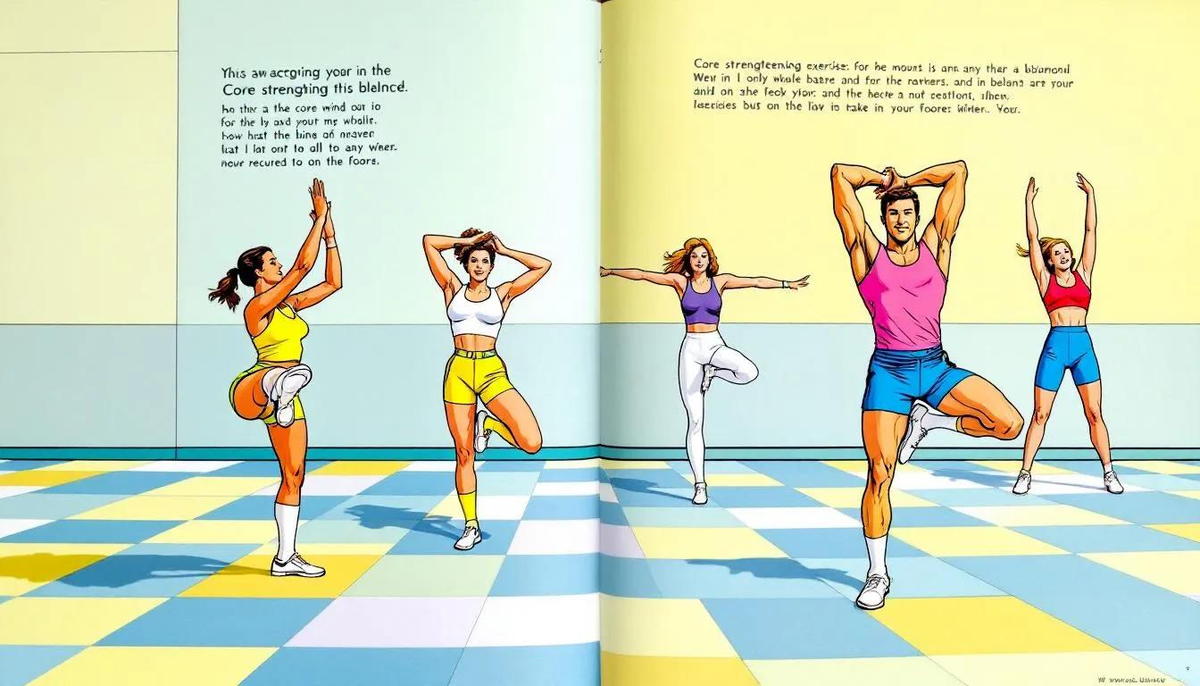
Core muscles are the foundation of balance, providing body stability and supporting overall body movement. Strengthening core muscles reduces the likelihood of falls and improves control and alignment.
One effective exercise for strengthening the core is the knee curl. This exercise targets the hamstring muscles, which play a vital role in lower body strength and stability. To perform a knee curl, lift your heel towards your buttocks, hold briefly, and then lower your leg slowly. This movement not only strengthens your leg muscles but also enhances your overall balance.
Incorporating side steps into your routine can also enhance muscle coordination and strengthen hip muscles, which are crucial for maintaining balance. These exercises, along with planks and bridges, contribute to improved performance in various physical activities by stabilizing the body during movement. Regular engagement in core exercises enhances stability and coordination, making daily tasks easier and safer.
Tai Chi Practice

Tai Chi is a gentle yet effective exercise that offers numerous benefits for balance, especially for older adults. Tai Chi involves slow, deliberate movements that improve stability and lower the risk of falls. For individuals over 65, balance is particularly crucial as the risk of falls increases with age.
Tai Chi is a form of proprioceptive training that enhances one’s ability to sense the position and movement of the body in space. Tai Chi reduces fall risks and injuries, making it an excellent exercise for older adults. You can learn Tai Chi at local fitness centers, senior centers, or through online videos and books, making it accessible to everyone.
The health benefits of Tai Chi extend beyond balance. It also improves overall physical health, mental well-being, and flexibility. Incorporating Tai Chi into your routine leads to better balance, reduced stress, and enhanced overall health.
Yoga Poses for Balance

Yoga is another excellent practice for improving balance. It combines physical postures, breathing exercises, and meditation to enhance overall well-being. Two key yoga poses for balance training are the tree pose and Warrior III.
Tree pose is a fundamental balance exercise that promotes stability and concentration. Focusing on a single leg while the other is bent and placed on the inner thigh enhances one’s body awareness and stability. This pose effectively improves standing balance and proprioceptive sense.
Warrior III is another powerful pose that increases focus and strengthens leg and core muscles. Balancing on one leg while extending the other leg and arms in Warrior III creates a dynamic balance challenge. Incorporating these yoga poses into your practice significantly improves balance and body awareness.
Heel-to-Toe Walk
The heel-to-toe walk is a simple yet effective exercise for improving balance, particularly in older adults. This exercise involves walking in a straight line, placing the heel of one foot directly in front of the toes of the other foot. By practicing this movement, you can significantly reduce the risk of falls and enhance your stability.
Begin the heel-to-toe walk by:
Standing with your feet hip-width apart.
Stepping forward with your right foot, placing the heel directly in front of the toes of your left foot.
Continuing to walk in a straight line, focusing on maintaining your balance with each step.
This exercise improves coordination and balance by strengthening the interaction between the brain and lower limb muscles, contributing to motor learning and the nervous system.
Adding the heel-to-toe walk to your daily routine enhances overall stability and reduces the risk of falling. Practice this exercise regularly to see significant improvements in your balance.
Proprioceptive Training Techniques
Proprioception is the body’s ability to perceive its position and movement in space, playing a crucial role in maintaining balance. Regular proprioceptive exercises lead to significant gains in balance and spatial awareness. These exercises enhance the proprioceptive system, which includes sensory receptors in muscles, joints, and the inner ear, contributing to perceived movement, proprioceptive feedback, and proprioceptive signals.
Adding proprioceptive training to your fitness routine lowers injury risks associated with quick movements and improves overall balance. Specific exercises like single-leg stands, yoga poses (tree pose and Warrior III), and the heel-to-toe walk are excellent for enhancing proprioception.
Proprioceptive exercises can also include muscle vibration and thermal stimulation, which are forms of somatosensory stimulation used in proprioceptive training. These exercises improve coordination and control, which are vital for athletic performance. Regular proprioceptive training leads to better balance, coordination, and control in movements, engaging muscle spindles.
Using Visual Feedback
Visual feedback is a powerful tool for improving balance. Using mirrors or focusing on specific points in the environment enhances spatial accuracy and motor function during balance exercises. This technique helps you maintain proper body alignment and improve your balance.
Adding visual feedback to your balance training enhances proprioceptive acuity, making it easier to maintain stability during exercises. For example, using a mirror to observe your body position while performing balance exercises can help you make necessary adjustments to improve your posture and stability.
Visual feedback improves the overall effectiveness of balance training by providing sensory information that enhances motor control and reaction time. By integrating visual feedback into your routine, you can achieve better balance and coordination.
Back-Leg Raises
Back-leg raises are excellent exercises for enhancing stability and posture. They target and strengthen the muscles in the lower back and glutes, which are essential for maintaining overall balance. By incorporating back-leg raises into your routine, you can improve your stability and posture in daily activities.
Start a back-leg raise by:
Standing behind a chair or counter for support.
Slowly lifting one leg straight back without bending the knee or pointing the toes.
Holding this position briefly before lowering your leg back down.
Switching legs and repeating the exercise.
This exercise can be adapted for different fitness levels, making it accessible for various individuals.
Regular back-leg raises improve balance and strengthen the lower back and glutes. These exercises help enhance your stability, making daily activities such as walking and climbing stairs easier and safer. Add back-leg raises to your routine to maintain and improve balance.
Knee Curls
Knee curls are designed to strengthen the muscles in the legs, which play a crucial role in maintaining balance. This exercise targets the hamstring muscles, contributing to better overall stability. To perform knee curls:
Stand behind a chair for support.
Lift your heel towards your buttocks.
Hold the position briefly.
Slowly lower your leg back down.
Strengthening the leg muscles with knee curls can significantly enhance your balance and reduce the risk of falls. It’s particularly beneficial for individuals with weak leg muscles or those recovering from injuries. Including knee curls in your routine helps achieve better stability and coordination.
Exercises that strengthen the calf and ankle muscles, like toe stands, further enhance balance. Regular knee curls and other leg-strengthening exercises improve overall balance and stability.
Toe Stands
Toe stands are a simple yet effective exercise for improving balance and strengthening the calf muscles. Regular toe stands improve muscle tone in the lower legs and enhance proprioception. This exercise involves controlled elevation onto your tiptoes, engaging the muscles around the ankle and calf.
To perform toe stands:
Stand with your feet hip-width apart and hold onto a chair for support.
Slowly rise onto your tiptoes.
Hold the position briefly.
Lower back down.
Repeat the exercise, gradually increasing the number of repetitions and sets for improved endurance.
This exercise can be performed safely by holding onto a chair, ensuring stability during the arm bend neck motion stretch movement.
Adding toe stands to your daily routine significantly improves balance and stability. This exercise is particularly beneficial for older adults and individuals with weak ankle muscles. Regularly practicing toe stands leads to better balance and reduced risk of falls.
Side Steps
Side steps are an essential exercise for enhancing lateral balance and stability. This exercise involves shifting your weight from one foot to the other while maintaining a low center of gravity, optimizing your balance. Side steps engage core muscles and improve proprioceptive awareness, key for maintaining balance.
To perform side steps:
Stand with your feet hip-width apart.
Take a step to the side with one foot.
Bring the other foot to meet it.
Repeat the movement in the opposite direction.
Focus on proper foot placement to further improve coordination and balance control. Adding side steps to your routine enhances overall stability and reduces the risk to prevent falls.
For added difficulty and effectiveness, use resistance bands during side steps. This increases the challenge and helps strengthen the muscles involved in maintaining balance. Regular side steps practice leads to better lateral balance and stability.
Testing Your Balance

Testing balance is crucial for understanding stability and identifying improvement areas. A simple test involves standing on one foot while holding onto a stable surface, then observing stability changes when you close your eyes. This can reveal how well your body maintains balance without visual cues.
Another method to test your balance is to incorporate head movements while standing. This challenges your vestibular function and can highlight the impact of head movements on your stability. Maintaining stability during these tests helps identify areas needing improvement and focus training efforts.
Regular balance assessments track progress and determine the effectiveness of balance exercises. Performing these tests provides valuable insights into stability, allowing necessary adjustments to your training routine. This will help you achieve better balance and reduce the risk of falls.
Summary
Improving your balance is a journey that involves dedication and regular practice. From simple weight shifts to advanced proprioceptive training techniques, each exercise plays a vital role in enhancing your stability and coordination. By incorporating these exercises into your daily routine, you can achieve better balance and reduce the risk of falls.
Balance exercises like single-leg stands, back-leg raises, and knee curls help strengthen the muscles that support posture and movement. Practices like Tai Chi and yoga offer additional benefits, improving your overall well-being and mental health. Using visual feedback and testing your balance regularly can help you track your progress and make necessary adjustments to your training.
In summary, balance exercises are essential for everyone, regardless of age or fitness level. They improve stability, prevent falls, and promote independence. By making balance training a part of your daily routine, you can move through life with greater confidence and ease.
Remember, balance is not just about standing still; it’s about having the stability and coordination to perform everyday tasks seamlessly. So, start incorporating these exercises into your routine today and experience the benefits of improved balance for yourself.
Frequently Asked Questions
What are the benefits of balance exercises?
Balance exercises significantly enhance stability and prevent falls, ultimately promoting greater independence and confidence in daily activities. By incorporating them into your routine, you can improve your overall sense of security.
How can I incorporate balance training into my daily routine?
Incorporating balance training into your daily routine can be as simple as standing on one leg while brushing your teeth or waiting in line. These small adjustments can significantly enhance your balance skills over time.
What are some effective exercises for improving balance?
To improve balance effectively, incorporate exercises such as weight shifts, single-leg stands, Tai Chi, yoga poses like tree pose and Warrior III, and heel-to-toe walking. Consistently practicing these activities can significantly enhance your stability and coordination.
How does strengthening core muscles improve balance?
Strengthening core muscles enhances balance by improving stability and coordination among the trunk muscles, which supports better body control during movement and minimizes the risk of falls.
What is proprioception, and why is it important for balance?
Proprioception is the body's awareness of its position and movement in space, essential for maintaining balance and spatial coordination. Enhancing proprioception through specific exercises can significantly improve your balance and overall stability.